



Natural Sunscreen Alternatives: How I Protect My Skin (and the Sea)
Last Updated May 26, 2026
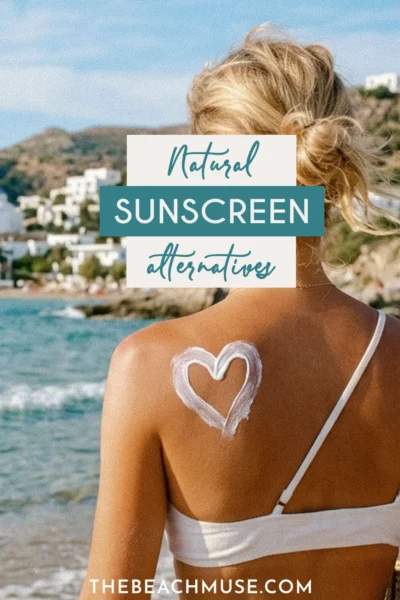
I’ve never been a fan of chemical sunscreens. The synthetic fragrances (although it does remind me of my childhood!), the endless ingredient lists, and above all, what happens once it all washes off in the sea… So my mission these last years has been clear: find some natural sunscreen alternatives!
I swim almost exclusively in the Mediterranean, and even without tropical coral reefs, the ecosystem is incredibly rich and fragile! Studies confirm that chemical UV filters affect marine life well beyond tropical reefs, including mussels, fish larvae and other species that live right here in the Mediterranean.
The good news is that protecting your skin from the sun without harmful chemicals is absolutely possible. Here’s everything I’ve learned, what I personally use, and what actually works as natural sunscreen alternatives!
This article contains affiliate links. If you book through my links, I earn a small commission at no extra cost to you. Thank you for supporting The Beach Muse!
A quick word of honesty first: what “natural sunscreen alternative” actually means
A lot of articles on this topic list natural oils with some UV-filtering properties and present them as sunscreen replacements. I want to be straight with you: most natural oils (coconut, olive, carrot seed) do offer some UV protection, but their SPF is generally low, between 4 and 10. That’s not enough if you’re spending hours under a strong summer sun.
The real natural sunscreen alternatives fall into five categories, and the best approach combines them: mineral sunscreens, natural oils as a complement, smart sun habits, sun protective clothing and new-generation clean sunscreens.
Mineral sunscreens: the most effective natural alternative
Mineral sunscreens use zinc oxide and/or titanium dioxide as UV filters. Unlike chemical sunscreens, they work by physically reflecting UV rays off the skin rather than absorbing them. They’re not absorbed into the bloodstream and are not linked to endocrine disruption. For me, that’s already a huge win!
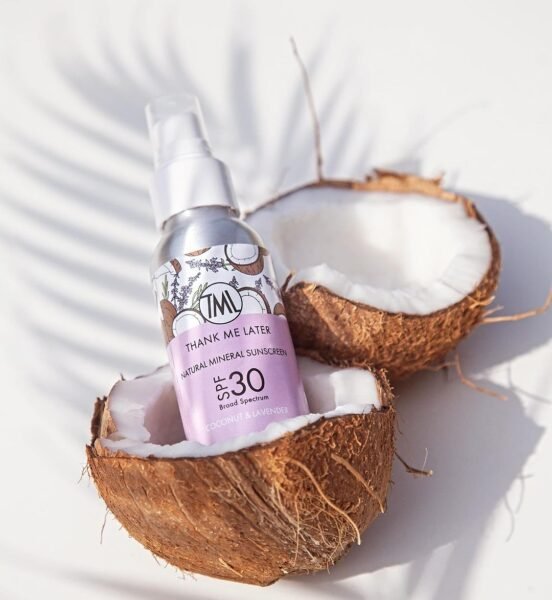
My favourites : Thank Me Later Mineral Sunscreen (see review below) & Project Reef Mineral Sunscreen
What ingredients to look for on the label
On the label, look for zinc oxide and/or titanium dioxide (ideally non-nano, to limit marine impact), and make sure the formula is free from oxybenzone, octinoxate, benzophenone-3, octocrylene and nanoparticles. Terms like “reef-safe”, “biodegradable” and “non-nano mineral filters” are good signs.
Thank Me Later Sunscreen
I discovered the brand Thank Me Later a few years ago while on vacation in Bali. It’s genuinely one of the best sunscreen discoveries I’ve ever made! The formula uses zinc oxide and titanium dioxide as UV filters, both naturally occurring minerals.
The texture surprised me: super lightweight and more comfortable than all mineral sunscreens I’d tried, no white cast, and a beautiful scent that takes me straight back to Bali every time I apply it (I love the lavender-coconut one). My order arrived with a handwritten note, which I loved.
The main downside is availability and price: it’s primarily sold online and shipping is quite expensive (on top of the sunscreen being already quite expensive itself). For a full ingredient breakdown and my complete experience, read my full Thank Me Later review. If you can get hold of it, it’s absolutely worth it!
Natural oils as a complement
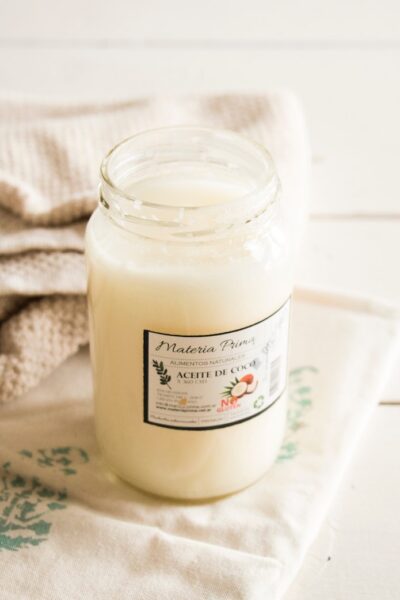
Natural oils are not a replacement for sunscreen, but they’re a wonderful complement, especially once your skin has already been exposed to the sun for a few days. I love applying my homemade tanning oil on top of my sunscreen once my skin has built up some colour (I also usually skip the sunscreen altogether at the end of the summer). The oils help the skin tan more evenly, stay nourished and develop a gorgeous golden glow rather than a dry, flaky tan.
The oils with the most relevant UV-protective properties are coconut oil (SPF ~4, great for triggering melanin production), raspberry seed oil (estimated SPF 28-50 for UVB in some studies), carrot seed oil (estimated SPF 35-40, rich in beta-carotene), grapeseed oil (excellent antioxidant properties) and olive oil (SPF ~7-8, a Mediterranean staple for centuries!).
One important note: these oils increase UV absorption, which means you’ll tan faster but also burn faster if you use them without proper sunscreen. Always apply your sunscreen first, let it absorb, then layer the oil on top.
Smart sun habits: the most chemical-free protection of all
One of the most effective ways to avoid sunburn is simply being intentional about when and how you expose yourself. Avoid the midday sun between 12pm and 4pm, especially in the first few days of summer or after a long winter indoors. An umbrella, a wide-brimmed hat (or at least a cap), or simply moving into the shade during peak hours makes a huge difference!
Expose yourself progressively too. If you spend hours in the sun on day one, you’ll burn. Start with shorter sessions and build up gradually over several days, your skin becomes more resilient as it produces more melanin. This is also the secret to a deep, long-lasting tan rather than a burn-and-peel cycle.
And reapply sunscreen every two hours and after every swim. Most people dramatically underestimate how much sunscreen actually stays on the skin after swimming!
For all my tips on getting a deep, even tan while protecting your skin, read my complete guide to getting a perfect tan.
Sun-protective clothing
A lightweight UPF garment is alternatively one of the simplest forms of sun protection, and it’s completely chemical-free. A standard t-shirt offers UPF ~5, very little. UPF 50+ garments block 98% of UV rays.
For beach days, a light linen long-sleeve shirt over your swimwear during midday hours protects your shoulders and arms without any product at all. That’s usually what I like to wear when on my way to the beach to avoid sunburn, especially at the beginning of the summer. Add a wide-brimmed hat and UV sunglasses, and you’ve covered most of your body for the hottest part of the day!
New-generation clean sunscreens: a great alternative
Between conventional chemical sunscreens and mineral ones, there’s a category that doesn’t get enough attention: clean chemical sunscreens formulated without the most harmful ingredients.
These products use organic UV filters that are technically chemical, but from a newer generation that avoid the most controversial compounds: no oxybenzone, no octinoxate, no benzophenones, no endocrine disruptors, no nanoparticles. Their formulas are also certified biodegradable and non-toxic to marine life, which I find perfect in my case!
What ingredients to look for on the label
On the label, look for newer-generation filters like Bis-Ethylhexyloxyphenol Methoxyphenyl Triazine or Ethylhexyl Triazone, and avoid oxybenzone, octinoxate and octocrylene.
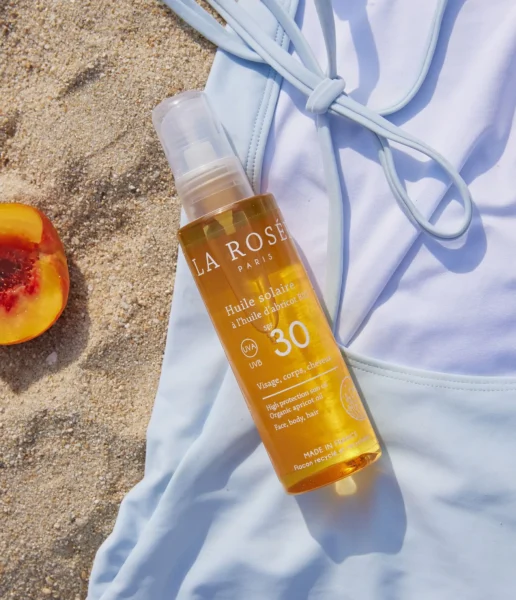
La Rosée Huile Solaire SPF 30 à l’Huile d’Abricot Bio
This is my everyday sunscreen and I genuinely love it. The formula is built around organic apricot kernel oil, rich in vitamins A and E, which nourishes and illuminates the skin while protecting it. The texture is a dry oil, completely transparent, absorbed instantly with (almost) no greasy residue. And the apricot scent is one of those fragrances that immediately puts me in a summer mood! I love it.
The sunscreen’s ingredients list is also genuinely clean: biodegradable, non-toxic to marine life, and free from parabens, endocrine disruptors, nanoparticles, silicones, benzophenones and other controversial ingredients. It comes in SPF 30 (for skin that’s already built up some colour, or later in the season) and SPF 50 (for fair skin or the start of summer). There is also a lotion form for those who prefer a regular creamy texture.
Ingredients to avoid in any sunscreen
Whatever sunscreen you choose, watch out for these on the label: oxybenzone (benzophenone-3), octinoxate, octocrylene, benzophenone-1 and benzophenone-8, 4-methylbenzylidene camphor, and nano titanium dioxide or nano zinc oxide. These have all been shown to be harmful to coral, fish, sea urchins and other marine organisms.
Natural sunscreen alternatives: why it matters
Chemical UV filters, particularly oxybenzone and octinoxate, have been shown to damage coral DNA, disrupt reproduction and contribute to bleaching. But the impact isn’t limited to tropical reefs.
Research has found that Mediterranean species are also affected, including mussels, fish larvae, sea urchins and marine mammals. Switching to a biodegradable, reef-safe sunscreen is one of the most immediate, concrete things you can do to reduce your personal impact on the sea you swim in!
About natural sunscreen alternatives: FAQ
What is the most effective natural sunscreen alternative?
Mineral sunscreen based on non-nano zinc oxide is the most effective natural alternative. It provides broad-spectrum UVA and UVB protection without being absorbed into the bloodstream and without harming marine life. For a lighter texture with equally clean credentials, new-generation clean sunscreens like La Rosée are a great option too!
Is coconut oil a good sunscreen alternative?
Coconut oil has an estimated SPF of around 4, which isn’t sufficient as standalone sun protection. It’s excellent as a complement to sunscreen though, helping your skin tan more evenly and stay nourished. But never rely on it alone!
What sunscreen ingredients should I avoid to protect marine life?
The main ones to avoid are oxybenzone, octinoxate, octocrylene and nano-sized mineral particles. Look for sunscreens labelled reef-safe, biodegradable, and free from these ingredients.
Are mineral sunscreens really better for the environment?
Non-nano mineral sunscreens are generally considered safer for marine ecosystems than conventional chemical ones. That said, even mineral formulas can contain additives, so no sunscreen is perfectly neutral. The best approach is to apply sunscreen mindfully, wear protective clothing when you can and have smart sun habits to minimise how much product you actually need!
My sources
- Downs, C.A. et al. (2016). Toxicopathological Effects of the Sunscreen UV Filter, Oxybenzone (Benzophenone-3), on Coral Planulae and Cultured Primary Cells. Archives of Environmental Contamination and Toxicology.
- NOAA (2022). Sunscreen Chemicals and Coral Reefs. National Oceanic and Atmospheric Administration.
- National Academy of Sciences (2022). Review of Fate, Exposure, and Effects of Sunscreens in Aquatic Environments and Implications for Sunscreen Usage and Human Health.
- Sureda, A. et al. (2018). Effects of TiO2 nanoparticles on the Mediterranean mussel Mytilus galloprovincialis. PMC / Environmental Research.
- Kaur, C.D. & Saraf, S. (2010). In vitro sun protection factor determination of herbal oils. Pharmacognosy Research.
- Ácsová, A. et al. (2021). The real UVB photoprotective efficacy of vegetable oils: in vitro and in vivo studies. Photochemical & Photobiological Sciences.
- Smithsonian Ocean (2023). The Truth About Corals and Sunscreen.
Did you like this post? Save it on Pinterest!